
Rule34 Explained: Enjoy Full HD Streaming for Free
Rule34 is one of those pieces of internet slang you can encounter almost anywhere: in memes, social media comments, anime discussions, gaming communities, imageboards, or a joke that makes absolutely no sense until you know the backstory.
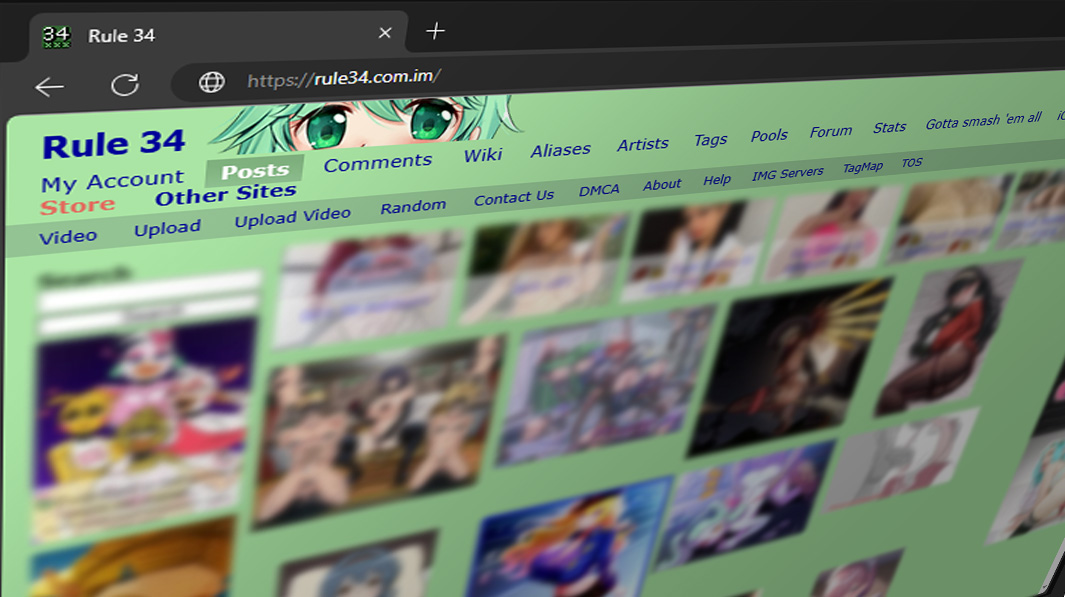
At its core, Rule34 is an old internet meme suggesting that if something exists, adult-themed material about it probably exists somewhere online. More importantly, Rule34 is an internet saying rather than the name of one official website. Over time, websites, search tools, boorus, and third-party apps have borrowed the phrase, which is why newcomers often assume Rule34 refers to a single platform.
That distinction explains many of the questions people search today: What is Rule34? Where did it come from? Is there an official Rule34 site? Is it safe? Why does it appear so often alongside anime? The answers become much clearer once the meme, the websites using its name, and booru-style imageboards are treated as separate things.
What Does Rule34 Mean?
The simplest Rule34 definition is an informal internet saying claiming that practically any recognizable subject can eventually become the basis for adult-oriented parody or fan-created material.
It is not a scientific rule or an official internet standard. A better way to understand it is as a long-running joke about the enormous scale of online creativity and the tendency of internet communities to remix almost every recognizable subject.
The expression became one of the best-known entries associated with the loosely defined Rules of the Internet, a collection of humorous and deliberately exaggerated sayings that circulated through message boards, meme communities, imageboards, and early internet subcultures during the 2000s.
What does Rule34 mean in plain English?
In simple terms, Rule34 is an internet meme suggesting that nearly every sufficiently popular subject will eventually inspire some form of adult fan-created content online. People now use the phrase both literally and jokingly, and in many conversations nobody is actually referring to a particular website.
Fictional expert perspective — Dr. Maya Ellison, digital-culture researcher: "Rule34 survived because it works as a joke about scale. The larger the internet becomes, the more believable the exaggeration sounds."
Where Did Rule34 Come From?
The commonly documented Rule34 origin goes back to a webcomic created during the early 2000s. The phrase is widely traced to a 2003 comic by Peter Morley-Souter, also known online as TangoStari. The comic used the expression "Rule #34" after its creator encountered unexpected adult parody material involving familiar fictional characters.
The comic itself never needed to remain famous for the phrase to survive. Internet communities repeated the wording, modified it, reposted it, and eventually separated the phrase from its original context. That process is typical of early internet folklore: a joke begins in one place and later becomes recognizable even among people who have never seen the original source.
When was Rule34 created?
The phrase is generally traced to 2003, although its broader popularity developed over the following years. During the mid-to-late 2000s, Rule34 became increasingly recognizable through forums, meme communities, imageboards, and collections of the so-called Rules of the Internet.
This distinction matters when reading about the history of Rule34. One date can describe the earliest documented wording, while another period can describe the time when the meme became widely known. Those are related events, but they are not exactly the same milestone.
What Is the Connection Between Rule34 and 4chan?
4chan did not need to invent Rule34 in order to become strongly associated with it. During the 2000s, versions of the Rules of the Internet circulated through imageboards, Anonymous-related communities, forums, and meme spaces. Rule34 became one of the entries that escaped those environments and entered wider internet vocabulary.
This is an important part of understanding internet history. Origin and popularization are different things. A phrase can appear in one corner of the web and become culturally significant somewhere else. Rule34 followed exactly that pattern.
Is Rule34 really an internet rule?
Only in a humorous sense. Nobody administers the Rules of the Internet, and there is no central authority maintaining one definitive version. Different historical lists contained different wording and sometimes different numbering.
Rule34 is therefore better understood as internet folklore. Like an urban legend, catchphrase, or recurring inside joke, it became familiar because people copied it repeatedly until the phrase itself became more famous than its original context.
Why Is It Called Rule34?
The name comes from its placement as number 34 within versions of the so-called Rules of the Internet. Over time, that particular number became much more recognizable than most of the surrounding entries.
Different versions of the Rules of the Internet appeared across different communities, so the complete collection was never especially stable. Rule34 nevertheless became independently recognizable. Today, someone can mention "Rule34" without explaining any of the other rules, and many experienced internet users will understand the reference immediately.
Is Rule34 a Website or an Internet Rule?
This is probably the most common misunderstanding surrounding the term. Rule34 originally refers to the internet meme, not a single website. Because the phrase became extremely popular, multiple unrelated websites, search interfaces, imageboards, browser tools, and third-party applications later adopted the name.
| Term | What It Usually Means |
|---|---|
| Rule34 | The original internet meme or saying |
| Rule34 site | A website using the term or focusing on related material |
| Rule34 booru | A tag-based imageboard organized around searchable posts |
| Rule34 app | Usually a third-party application, web interface, browser tool, or PWA |
| Rule34 official site | A potentially confusing phrase because the meme itself has no single central platform |
There is therefore no universal "Rule34 company" behind everything carrying the phrase. This matters because two websites with similar names may have completely different owners, policies, moderation systems, advertising networks, and technical quality.
Fictional expert perspective — Dr. Maya Ellison: "Treat Rule34 like the word 'meme,' not like the name of Netflix. Many services can use the term without belonging to one organization."
Is There an Official Rule34 Site?
Not in the conventional sense. Because Rule34 began as an internet concept rather than a centrally operated brand, describing one domain as the definitive Rule34 website can be misleading.
Multiple independent services use expressions such as Rule34 online, Rule34 browser, Rule34 mobile, Rule34 imageboard, Rule34 app, or Rule34 booru. These services can be operated by completely different people and can function in very different ways.
The important takeaway is simple: evaluate the specific website you are visiting rather than assuming that a familiar phrase in its name proves who operates it or how trustworthy it is.
What Is a Rule34 Booru?
The word booru generally refers to an imageboard organized around tags. Instead of navigating primarily through folders, timelines, or traditional categories, users search descriptive metadata attached to individual posts.
A post might contain information identifying a character, artist, franchise, source universe, visual style, medium, content rating, or other searchable characteristics. This approach allows a very large visual archive to behave more like a database than a traditional social feed.
Rule34 vs. booru: what's the difference?
Rule34 is a concept, while booru describes a type of website organization. The two became closely associated because tag-driven imageboards are particularly useful for large fan-art archives.
A simple comparison helps. A recipe is a type of content, while a cookbook is a way of organizing recipes. In much the same way, Rule34 describes an internet concept, while a booru describes one method of storing and searching visual material.
Why Is Rule34 Associated With Anime and Manga?
Search for Rule34 long enough and anime, manga, games, and Japanese-style fan art frequently appear nearby. That association developed partly because anime and gaming communities have historically been highly active in fan illustration, remix culture, character-focused art, imageboards, and detailed tagging systems.
Booru-style platforms also became closely associated with anime artwork. Because those platforms organize posts with precise tags, individual characters and franchises can become extremely easy to search.
Rule34 itself, however, is not limited to anime or manga. The meme can be applied to almost any recognizable fictional universe, game, movie, television series, object, trend, celebrity reference, or internet phenomenon.
Why do anime searches appear so frequently?
Anime communities often use highly structured naming conventions for characters, franchises, artists, and visual attributes. That structure can make anime-related material easier for both users and search systems to categorize, giving it unusually high visibility compared with fandoms that rely on less consistent metadata.
How Does Rule34 Work Online?
There is no single technical system behind Rule34 because the meme itself is not a service. On booru-style platforms, however, the typical experience revolves around tags and metadata.
A person might begin with a character or franchise name, then narrow the results using additional tags. A database can then match those terms against posts containing relevant metadata. More advanced interfaces may also provide artist information, rating filters, aliases, related tags, formats, or source information.
This is why very specific combinations involving Rule34 anime, Rule34 manga, Rule34 fan art, character names, or franchises can generate narrowly focused results. The real power of a booru-style system is usually its metadata rather than its visual design.
Does Rule34 Require Registration?
The Rule34 meme itself obviously requires no account. Websites using the term can have completely different registration policies.
One platform may allow visitors to browse without signing in while reserving favorites, uploads, comments, or account settings for registered users. Another may require registration for certain areas. Because these services are independent, there is no universal Rule34 registration requirement.
Anyone considering an account should first verify which service they are using and whether creating an account provides any genuine benefit. Avoid supplying unnecessary personal information simply because a website uses a familiar name.
Is Rule34 Free?
Rule34 as an internet saying costs nothing to reference. Websites and applications using the phrase can have completely different business models.
Some platforms may rely on advertising, some may provide optional accounts, some may accept donations, and others may offer subscription-based features. A search result containing the phrase Rule34 free should therefore not be interpreted as describing every website or service using the term.
Checking the exact service is always more useful than making assumptions based on the keyword alone.
Is Rule34 Safe?
The word safe can mean two very different things in this context. One question concerns whether the content is appropriate for the viewer, while the other concerns whether a particular website creates browser or device security risks.
Is the content appropriate?
Rule34 is closely associated with adult material and should be treated as an 18+ topic. People who do not want to encounter mature material should avoid searches specifically targeting Rule34 and instead use platforms with clearly defined safe-viewing or general-audience filters.
Is a Rule34 website technically safe?
That depends entirely on the specific website. The word Rule34 in a domain name does not reveal whether the site's advertising network, scripts, redirects, downloads, or permission requests are trustworthy.
Warning signs include unexpected redirects, new tabs that open without a clear reason, fake security warnings, requests to disable browser protection, forced extension installations, automatic downloads, unfamiliar archive files, unexplained notification requests, or executable files presented as necessary viewers.
Does Rule34 have viruses?
A concept cannot contain a virus, so it would be misleading to say that Rule34 itself has malware. Individual websites, advertisements, downloads, extensions, or redirected pages can still create security risks.
This distinction matters because people sometimes ask whether "Rule34 has viruses" as though every website using the name belonged to the same network. They do not. Security should be judged site by site.
How Can You Browse More Safely?
Basic browser habits make a meaningful difference. Keeping the browser and operating system updated reduces exposure to known vulnerabilities, while built-in phishing and malware protection can warn about suspicious pages before they cause trouble.
Unexpected downloads deserve particular caution. A page that claims you must install a special viewer, browser extension, codec, unknown APK, executable file, or archive just to continue browsing should immediately raise concern.
Permission requests also deserve attention. A normal imageboard generally has little reason to request access to your camera, precise location, contacts, or device files. Browser notifications can also become a source of spam if enabled on an unfamiliar domain.
Password hygiene matters as well. If registration is genuinely useful, using a unique password prevents a problem on one website from affecting accounts elsewhere.
Fictional expert perspective — Alex Morgan, cybersecurity educator: "The safest habit is surprisingly boring: don't install anything because a popup tells you to. Close the page, verify the source independently, and keep browser protection switched on."
Is Rule34 Safe on Mobile?
The same general precautions apply on smartphones and tablets. Mobile browsers can still encounter deceptive advertising, redirects, notification spam, fake security messages, unwanted application prompts, or pages attempting to imitate system warnings.
Using a phone instead of a desktop computer does not automatically make an unfamiliar site safer. Android users should be particularly cautious when a website encourages the installation of an APK from an unknown source.
If a mobile browser suddenly begins showing unusual notifications or redirects after visiting an unfamiliar site, reviewing browser permissions and recently installed applications is a sensible response.
Is There a Rule34 Mobile App?
There is no universal official Rule34 application because Rule34 itself is not a company. Different developers can create applications, browser interfaces, Progressive Web Apps, or wrappers that use the phrase in their names.
Some products may function mainly as interfaces for browsing one or more booru databases. Others may simply be mobile-friendly websites presented as apps.
Before installing anything described as a Rule34 mobile app, check who publishes it, where the installation file comes from, which permissions it requests, whether it is actually a native application or a web app, and whether your browser or operating system displays any security warning.
The word "official" in an app title should never be treated as proof that the app represents the original Rule34 concept.
Is Rule34 Safe to Download From?
Downloading files introduces more risk than simply viewing a webpage because downloaded software can interact directly with the device.
If your goal is only to understand Rule34, its history, or its internet meaning, there is usually no reason to install software at all.
Be especially cautious when a site claims you need a custom video player, browser plugin, codec, executable program, password-protected archive, or unknown mobile package before you can continue. A request to disable security protection before downloading something is an especially strong warning sign.
What Are Safer Rule34 Alternatives?
Sometimes a person searching for Rule34 alternatives is not really looking for adult material. They may simply want anime artwork, manga illustrations, character fan art, fandom communities, searchable image tags, or imageboard-style discovery.
In that case, mainstream art communities with adjustable content filters can provide a more predictable experience. Platforms that separate general material from mature material give users greater control over what appears while browsing.
If the real goal is ordinary fan art, beginning with a general-audience or safe-viewing mode is usually more practical than searching directly for Rule34.
Which Rule34 Alternatives Have Better Tag Systems?
The answer depends on what "better" means for the person searching.
Booru-style databases often excel at precise metadata. Character names, artists, franchises, visual properties, aliases, related concepts, and content ratings can be combined into detailed searches. Mainstream art platforms, by contrast, often focus more heavily on creators, feeds, galleries, recommendations, and social interaction.
Someone researching a specific fictional character may prefer the precision of a booru. Someone who mainly wants to follow favorite artists may prefer a conventional art community. The ideal system depends on the task rather than the popularity of the platform.
Why Is Rule34 Mentioned on Twitter or X?
On social networks, Rule34 is often used as shorthand. Sometimes it appears in discussions about fandom culture or fan art, while in other cases it is simply a joke or reaction.
The phrase can also be used as search bait. Someone may tell another person to search a fictional character followed by "Rule34" specifically because they expect the person not to know what the term means.
Understanding the phrase before searching helps avoid that kind of surprise.
What Does Rule34 Mean on Social Media?
On X, Reddit, TikTok, Discord communities, forums, or meme pages, Rule34 generally keeps the same basic meaning it developed during early internet culture.
The surrounding conversation determines whether the phrase is being used as an inside joke, a fandom reference, a warning about adult fan-created material, a meme, or simple commentary about how internet communities remix popular subjects.
In many cases, nobody is discussing a particular Rule34 website. They are referring to the cultural idea behind the phrase.
What Happened to Rule34?
Nothing necessarily "happened" to Rule34 in the sense of one platform disappearing, because the concept never depended on a single website.
Instead, the meme gradually moved from niche message-board vocabulary into wider internet culture. Individual forums closed, communities migrated, new social networks appeared, and imageboards changed, yet the phrase remained recognizable.
That persistence is one reason Rule34 is interesting from the perspective of internet history. Many jokes from the early 2000s vanished with the communities that created them, while Rule34 continued adapting to new fandoms and platforms.
Why Has Rule34 Lasted So Long?
Its longevity comes largely from simplicity and adaptability. The idea can be explained in one sentence, and it can be applied whenever a new game, anime, movie, fictional character, meme, or online phenomenon appears.
Rule34 also describes a pattern of internet behavior rather than one particular service. That gives it an unusual ability to survive technological change.
A useful comparison is the old phrase "don't feed the trolls." The websites that popularized such expressions may change, but the cultural idea remains understandable long after the original context has faded.
Rule34 as a Piece of Internet History
When viewed as internet folklore, Rule34 becomes an interesting example of how online culture evolves.
A joke appears. Communities repeat it. Different versions circulate. The original context gradually disappears. The phrase becomes recognizable on its own. Years later, a new generation encounters it without knowing the background and asks, What does Rule34 mean?
That cycle has continued for more than two decades.
It also demonstrates why reconstructing early internet culture can be difficult. Old posts disappear, archives are incomplete, usernames change, websites close, and phrases can circulate inside communities before anyone preserves a public record.
For that reason, careful discussions of the Rule34 history distinguish between the earliest documented use of the phrase and the later communities that made it widely recognizable.
Conclusion
Rule34 is best understood as a long-running piece of internet folklore rather than a specific website, company, or application. Its roots reach back to the early 2000s, while forums, imageboards, fandom communities, 4chan culture, and booru-style tagging helped spread the phrase across the wider web.
If you encounter searches for an "official Rule34 site," "Rule34 app," "Rule34 booru," or "Rule34 mobile site," remember that independent services can use the same terminology. Evaluate each website individually, keep browser protection enabled, and treat unusual redirects, downloads, security warnings, and unnecessary permission requests with caution.
If the real goal is ordinary anime, manga, gaming, or character fan art, platforms offering general-audience browsing modes and clear content controls can often provide a more predictable experience.
FAQ
What is Rule34?
Rule34 is an internet meme suggesting that almost any recognizable subject can eventually inspire adult-oriented fan-created material online. It became widely associated with the humorous Rules of the Internet and later spread throughout mainstream meme culture.
Where did Rule34 come from?
The phrase is commonly traced to a 2003 webcomic by Peter Morley-Souter. It later circulated through message boards, imageboards, meme communities, 4chan-related culture, and collections of the Rules of the Internet.
Is Rule34 a website?
No. Rule34 originally refers to an internet saying rather than one specific website. Multiple unrelated websites, apps, search tools, and imageboards later adopted the phrase.
What is the official Rule34 site?
There is no single universal website representing the original Rule34 meme. Different domains use the phrase independently, so ownership, moderation, registration requirements, and technical safety can vary from one service to another.
Does Rule34 have age restrictions?
Rule34 is associated with adult content and should be treated as an 18+ topic. Individual websites can apply their own age gates, account requirements, viewing settings, and content policies.
Is Rule34 safe?
The phrase itself is simply an internet meme. Website safety depends on the particular domain being visited. Browser warnings, suspicious redirects, unexpected downloads, fake security alerts, and unexplained permission requests should always be treated cautiously.
Is Rule34 mobile friendly?
There is no single Rule34 platform, so mobile support varies. Some services use responsive websites or Progressive Web Apps, while others may provide third-party applications. The source and requested permissions should be checked before installing anything.